Solo or together? The group dynamics of Chinese dive travellers
How many Chinese guests typically show up together? Based on the past year of bookings on our platform, the answer is: mostly alone, or in twos.
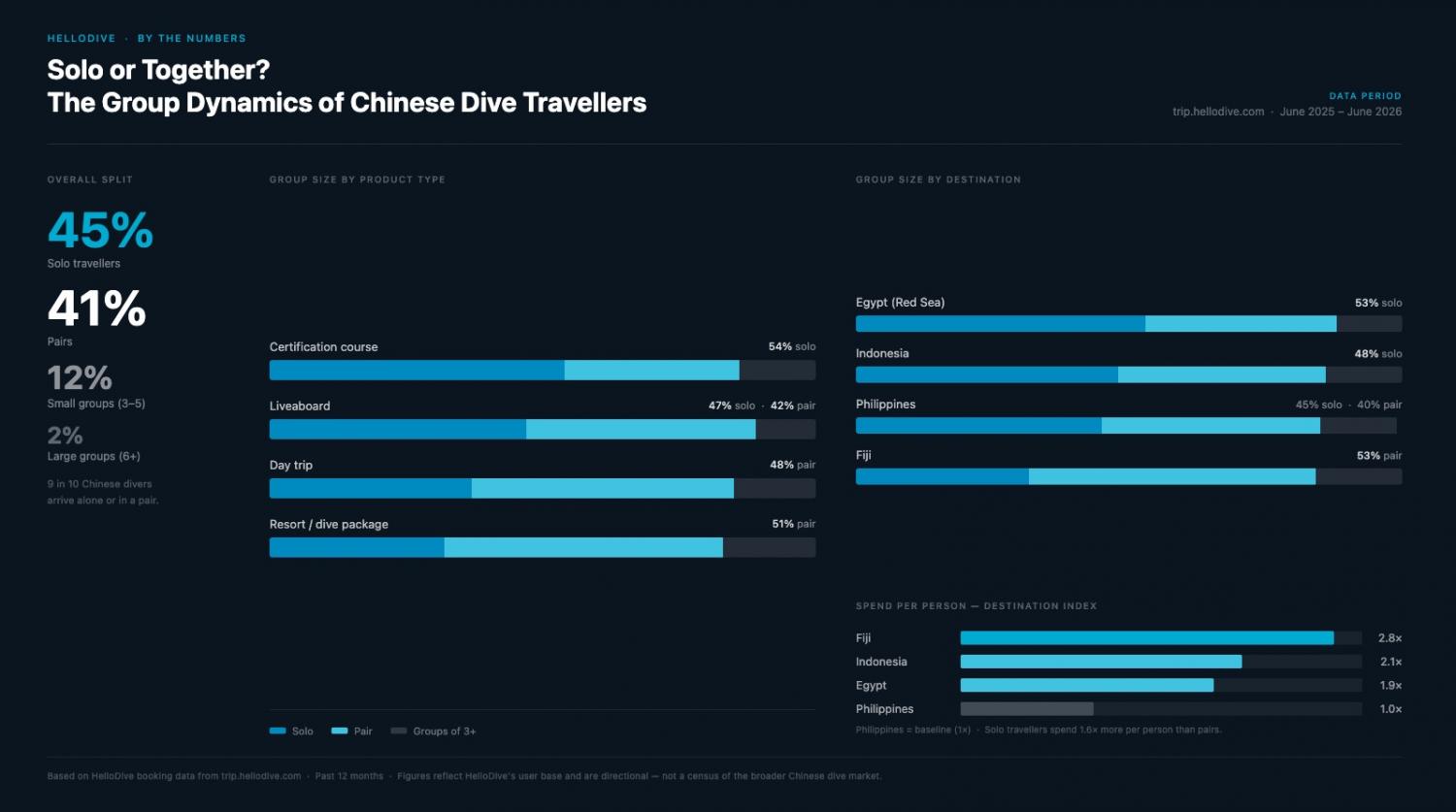
Solo travellers account for 45% of all travel groups, pairs 41%, small groups of three to five 12%, and groups of six or more just 2%. Nearly nine in ten Chinese divers arrive either alone or in a pair.
These figures are drawn from HelloDive booking data - a useful directional signal, though they reflect our user base rather than the full Chinese dive market.
The more interesting question is what drives this split. Looking at the data through three lenses - product type, destination, and spend - a clearer picture emerges.
Product type: the strongest predictor of group size
When we cut the data by product type, a consistent pattern emerges. Note that many products on our platform list multiple booking options within a single listing, so these figures are directional rather than precise:
| Product Type | Solo | Pair | Groups of 3+ |
|---|---|---|---|
| Certification Course | 54% | 32% | 14% |
| Liveaboard | 47% | 42% | 11% |
| Day Trip | 37% | 48% | 15% |
| Resort/Dive Package | 32% | 51% | 17% |
Certification courses draw the most solo travellers - learning to dive is typically a personal decision, made and booked alone. Resort and dive packages sit at the other end: pairs dominate, partly because the experience is naturally social, and partly because single supplements make solo resort stays considerably more expensive. Liveaboards land almost evenly in the middle.
A liveaboard operator can expect roughly half their Chinese guests to arrive solo, regardless of which ocean they're in. A resort operator should expect pairs to be their core audience.
Destination: same product, different traveller
Destination adds its own layer on top of product type. Four contrasting examples from our data:
| Destination | Solo | Pair | Groups of 3+ |
|---|---|---|---|
| Egypt (Red Sea) | 53% | 35% | 12% |
| Indonesia | 48% | 38% | 14% |
| Philippines | 45% | 40% | 14% |
| Fiji | 32% | 53% | 16% |
Egypt (Red Sea) is the clearest solo-travel destination in our dataset - virtually all bookings are liveaboards, and over half of guests arrive alone. These are experienced divers making a deliberate, often long-planned trip. They're there for the sites. They're comfortable going alone.
Indonesia also skews solo, with the broadest product mix of the four - roughly equal parts certification courses and resort/dive packages, spread across Bali, Komodo, and Raja Ampat. Despite the diversity of products, the solo lean holds: nearly half of all travel groups arrive alone. These guests span the range from first-time learners to experienced divers, but they tend to make the trip independently.
The Philippines occupies the middle ground: a mix of certification and resort bookings, with the most balanced solo-to-pair ratio of the four. It's also the most price-accessible of the four destinations, which may partly explain why more travellers bring a companion - it's an easier trip to propose to a friend.
Fiji tells a different story. Resort and experience packages dominate, pairs account for more than half of all groups, and per-person spend is nearly three times that of the Philippines. Fiji draws a guest who already dives - they're there for the full experience, and they usually don't come alone.
Spend: solo travellers pay more per person, but destination sets the ceiling
One counterintuitive finding: solo travellers spend roughly 60% more per person than those travelling in pairs. Some of that is structural (solo cabin rates, single supplements), but it's a meaningful signal. The solo Chinese diver is not a budget traveller.
| Group Size | Spend per person (indexed to pair) |
|---|---|
| Solo | 1.6x |
| Pair | 1.0x |
| Small Group (3-5) | 0.8x |
That said, where a guest chooses to go matters far more than how many they bring. Looking at the same four destinations, the per-person spend gap between Fiji and the Philippines is close to 3x - a spread that dwarfs anything group size alone can explain. Destination sets the budget ceiling. Group composition is, in that sense, almost secondary.
| Destination | Spend per person (indexed to Philippines) |
|---|---|
| Fiji | 2.8x |
| Indonesia | 2.1x |
| Egypt | 1.9x |
| Philippines | 1.0x |
What about holidays?
Across the three major Chinese public holidays - CNY, Labour Day, and Golden Week - the solo-and-pairs dominance holds firm. But the proportions shift in ways worth noting.
| Holiday period | Solo | Pair | Groups (3+) |
|---|---|---|---|
| Chinese New Year (Jan-Feb) | 47% | 44% | 9% |
| Labour Day (May) | 38% | 44% | 18% |
| Golden Week (Oct) | 42% | 42% | 17% |
| Non-holiday periods | 45% | 40% | 14% |
The CNY finding is perhaps the most counterintuitive: despite being China's biggest family holiday, dive travellers during this window show almost no large-group travel. Groups of three or more account for just 9% - the lowest of any period. Chinese divers appear to use CNY as personal escape time, heading out solo or as a couple rather than with extended family.
Golden Week tells a different story. Small group travel peaks here at 17% - nearly double the CNY figure. The longer consecutive break likely makes it easier for friend groups to coordinate a joint trip.
Labour Day trends slightly more pair-oriented than other periods, though the sample is small enough that this should be read as directional rather than definitive.
A side finding: the incentive is working
When cleaning the data for this analysis, we noticed that a meaningful share of bookings appearing as solo were actually from travellers departing together, each placing a separate order. When we dug into why, it became clear: they were each claiming our first-time user rewards.
We've corrected for this in all the figures above, so the numbers reflect actual travel groups rather than individual orders. But the behaviour itself is worth noting - Chinese divers are attentive enough to the platform to spot and act on the incentive, even if it means an extra step at checkout.
❗️Data sourced from trip.hellodive.com bookings over the past 12 months (1 June 2025 - 31 May 2026). Figures reflect HelloDive's booking base and are intended as a directional signal for the Chinese dive travel market.
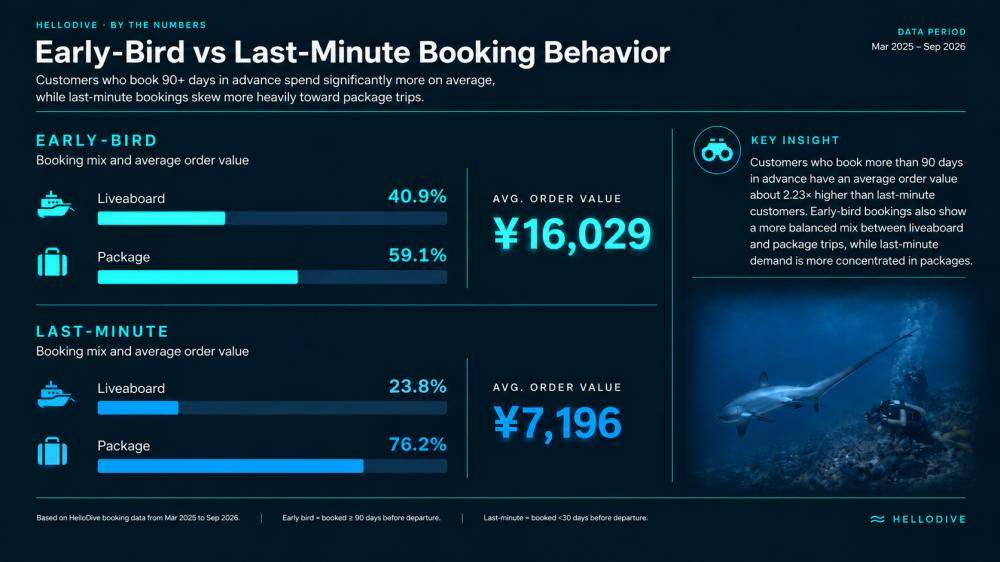
How early or late do Chinese divers book?
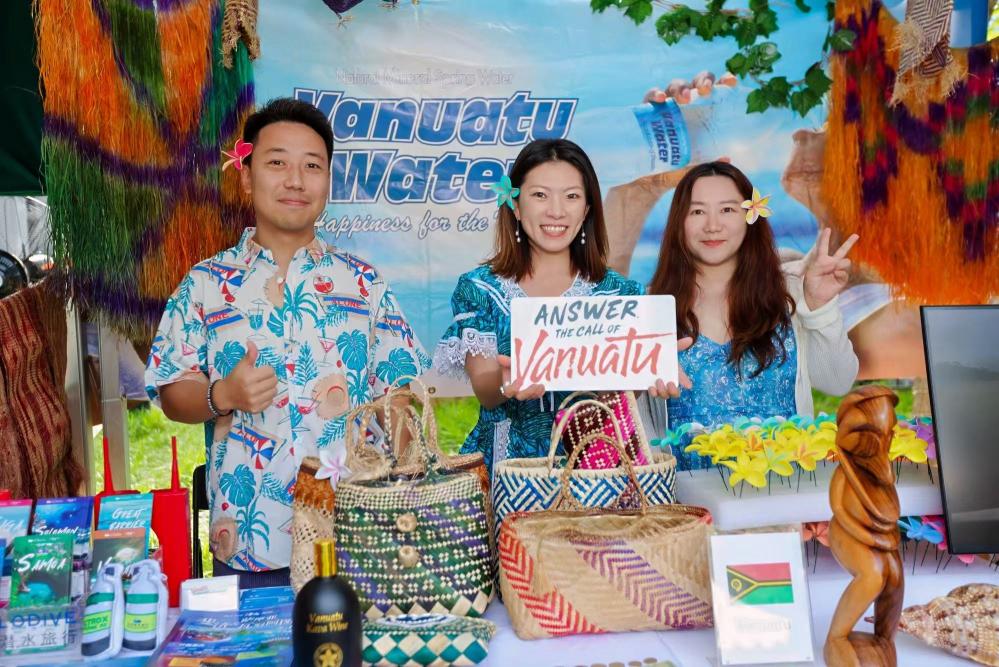
HelloDive at Pacific Day 2026: Vanuatu Diving in Focus
HelloDive's first SPTE visit reveals new opportunities for diving and tourism in the South Pacific